Friday, December 14, 2012

Terrible arguments against the Philippines' RH Bill

The Reproductive Health Bill (RH Bill) is a collection of proposed laws in the Republic of the Philippines, aiming to guarantee universal access to methods of contraception, fertility control, sexual education, and maternal care. The RH Bill is polarizing and controversial, with politicians, academics, and religious institutions on either side of the argument. Debates and rallies proposing and opposing the bills, with tens of thousands of opposition particularly those endorsed by the bishops of the Roman Catholic Church and various other conservative groups, have been happening nationwide.

According to the Senate Policy Brief titled “Promoting Reproductive Health”, the history of reproductive health in the Philippines dates back to 1967 when leaders of 12 countries including the Philippines' President Ferdinand Marcos signed the Declaration on Population. At the time, the Philippines agreed that the population problem be considered as the principal element for long-term economic development. The Population Commission was then created to push for a lower family size norm and provide education, information, and services to help lower fertility rates.

Economists in support of the bill say that rapid population growth and high fertility rates – especially among the poor – exacerbates poverty and makes it more difficult for government to address it. According to photius.com, the Philippines is the 39th most densely populated country, with a density over 335 per squared kilometer. The 2012 projected total fertility rate (TFR) – or the average of children a woman will have over her lifetime – is 3.15. And many of the babies are being born into the portion of the population which simply cannot afford it. The TFR for the richest quintile of the population is 2.0, which is about one third the TFR of the poorest quintile (5.9 children per woman). The TFR for women with college education is 2.3, about half that of women with only an elementary education (4.5 children per woman).

While some those who are against the bill for economic reasons point to the idea that a larger population can promote economic growth and stability, many of them oppose the bill for another reason. The head of the Roman Catholic Church in the Philippines, Archbishop Luis Antonio Tagle, opposes the RH Bill, along with abortion and contraception. Because 81% of Filipinos are Catholics, the Catholic Church has a strong influence over the population. Its staunch opposition to the bill has drawn controversy among non-Catholics and Catholics alike who support the bill, many whom invoke the principle of separation of church and state.

As a Canadian-Filipino who has visited the Philippines a half-dozen times or so in the past 20 years, my point-of-view is skewed by living in a developed country that has relatively unrestricted access to contraception, fertility control, sexual education, and maternal care, and perhaps it is not place to comment on this issue. However, I know many Filipinos across different socio-economic levels, age groups, education levels, and religious beliefs on both side of the debate, and respect their right to having and voicing their opinions. But even I – someone who knows very little about global economics and health issues – would like to think those people I know who oppose the RH Bill would not give the terrible, unsubstantiated and uninformed reasons in the illustration below to justify their position.  Shocking!


Thursday, December 13, 2012

The Best of 2012 - Music recordings

My favourite five music recordings of 2012 are: (in no particular order)
Redd Kross – Researching the Blues
Tame Impala – Lonerism
Dirty Projectors – Swing Lo Magellan
Alabama Shakes – Boys & Girls
Frank Ocean – Channel Orange

Here is a list of the various Best of 2012 music recording lists.

Slant Magazine - 25 Best Albums of 2012


The Rock and Roll Hall of Fame - Class of 2013

As I get older, I’m not sure if I look forward to or dread the announcement of the annual list of the Rock and Roll Hall of Fame inductees. On the one hand, I like to see bands which I grew up listening to get their due recognition by their peers and the industry. But I also dread it because I feel very old when those artists who were supposed to be the young bucks in the cesspool we call the music business while I was a youth are now being considered Hall of Famers.

The Class of 2013 includes Rush, Public Enemy, Heart, Randy Newman, Donna Summer and Albert King. The non-performers will be Lou Adler and Quincy Jones. While all inductees are no doubt worthy of the honour, here is why a few of them are significant to me.

Rush/Heart
With an older brother – ten years older – who played in rock bands while we were growing up in the late-1970s, some of my earliest music memories were of Rush and Heart.

Never a fan of the twenty minute prog-rock epic songs and the concept albums of Rush’s earlier material, the Permanent Waves (1980) and Moving Pictures (1981) records are the pinnacle Rush recordings, as far as I am concerned.


Like them or not, it’s difficult to argue that the compositions and the performances on those two albums – “Spirit of Radio”, “Freewill”, “Tom Sawyer”, “Limelight”, and “YYZ” specifically – are as good as any band will ever get. Rush being a hometown band also makes the induction extra sweet.

I’ve seen Rush in concert twice; the first time was at the August 2003 SARS concert at Toronto’s Downsview Park with 750,000 other people. The second was at Air Canada Centre in July 2010 where they played Moving Pictures in its entirety. I am pretty sure that during the Air Canada show, I only saw two women in the arena all night.

Speaking of two women, with their run of records including their debut Dreamboat Annie (1976), Little Queen (1977), two albums in 1978, Magazine and Dog and Butterfly, and ending with Babe Le Strange (1979), Ann and Nancy Wilson of Heart earned membership to the classic rock radio permanent playlist. I always dug the way Heart tried to be Led Zeppelin, but all that changed when puberty coincided with the release of the Heart album in 1985.


Like Rush, I have also seen Heart twice in concert. When I was in tenth grade in 1987, I saw them at the Maple Leaf Gardens in Toronto, as well as at Kingswood Music Theatre, at Canada’s Wonderland just north of Toronto, during the summer of 1990. Both times I was by far the youngest person in the crowd and perhaps the only one not wearing a pair of skin-tight, white jeans with a feathering brush in the back pocket.

Public Enemy
I often hear the question from rock purists: does rap groups like Public Enemy belong in the Rock and Roll Hall of Fame? You’re god damn right they do. With the delivery of 1950s beat poetry, the social conscience of 1960s folk, the confrontational nature of 1970s punk, and the bombastic voice of 1980s hardcore, Chuck D, Flavor Flav and Professor Griff rose up against the establishment with their black-gloved fists in the air and chips on their shoulders. Public Enemy were a music revolution in the mid 1980s as rap music and hip hop culture began to go from the streets of New York City into the mainstream.


Like almost any other modern and cool piece of music that I discovered in high school that had soul, veracity and balls, Public Enemy was introduced to me by Sheldon Street when he let me listen to It Takes a Nation of Millions to Hold Us Back (1988) one day in tenth grade on his cassette walkman. I remember saying to myself: “I don’t know if I truly understand this, but this is an important piece of music – good, bad or indifferent.” The album's anthemic “Don’t Believe the Hype” and “Fight the Power” included samples from legendary funk and soul, and their collaboration with Anthrax on the monster track “Bring the Noise” single-handedly created the rather unfortunate genre of rap-metal.

Albert King
In the late 1980s, while I was discovering “alternative” musical forms like rap and American hardcore, I also had a yearning to learn more about the blues that were influencing many of the contemporary guitar players. At the time I was a big fan of Stevie Ray Vaughan, who very much wore his influences on his sleeve. I made it a mission to discover those players he cited as his heroes. In particular, SRV named “The Three Kings of Guitar”: BB, Freddie, and Albert as his best of the best. While I gave all three Kings their due listening – as well as great axmen Buddy Guy and Albert Collins – I remember enjoying Albert King’s Stax recordings from 1960s the most, specifically Born Under a Bad Sign (1966), perhaps his signature recording. It was Albert King's guitar tone that felt like the blues itself.


Quincy Jones
There isn’t much to say about Quincy Jones’ influence on popular music that hasn’t already been said. His early work as a trumpeter with Dizzy Gillespie in the 1950s lead him to arranging songs for a number of music giants like Count Basie, Ray Charles, Frank Sinatra, Ella Fitzgerald and Duke Ellington. He then went on to produce records, perhaps most famously, with Michael Jackson on Off the Wall, Thriller, and Bad. The man is a legend and should be inducted into the Hall of Fame for his work on those three albums alone. Not to mention, he is also the father of actress Rashida Jones.


Sunday, December 9, 2012

Rick Mercer Rant for December 4, 2012

Rick Mercer's rant from the December 4, 2012 episode of the Rick Mercer Report on CBC. This week's topic: The Liberal Leadership Race


Saturday, December 8, 2012

Delgado to be inducted to Jays Level of Excellence

It was announced yesterday that the Toronto Blue Jays will be adding Carlos Delgado to the baseball club's Level of Excellence, which recognizes individual achievement.

In his 12 seasons with the team, the Puerto Rico native went on to become the franchise leader in several offensive categories including home runs (336), RBIs (1,058), walks (827), slugging percentage (.556), OPS (.949), runs (889), extra-base hits (690), doubles (343), total bases (2,786) and intentional walks (128).
Pat Gillick and Carlos Delgado
 
Delgado becomes the 10th person to be honoured with the team award, joining former players Dave Stieb, George Bell, Tony Fernandez, Joe Carter, and Roberto Alomar, former manager Cito Gaston, announcer Tom Cheek, former general manager Pat Gillick, and current team president Paul Beeston,

I often forget how good Delgado was as a Blue Jay, perhaps because the team did not make the playoffs while he was performing well, specifically in 2003 - hitting .302 with 42 home runs and 145 RBIs - when he was runner-up to Alex Rodriguez in voting for the American League MVP award that year. I've heard Delgado's former teammate Shawn Greene often refer to Delgado - who was picked up by the Blue Jays as a catcher out of José de Diego High School in Puerto Rico - as one of the smartest players in the game, resulting in he being able outwit pitchers and be a prolific hitter. But he also could do it defensively, with Beeston even calling him "one of the finest first basemen of his generation,”

An on-field ceremony will be held at Rogers Centre on July 21 before Toronto's game against Tampa Bay.

Photo credit: Kevin Frayer/Canadian Press

Rest in Peace Reinhold Weege

In the early to mid 1970s, the television sitcom genre went through a renaissance of sorts, moving away from the sugar-coated programs of the 1950s and 60s and becoming more reflective of the cultural and societal change occurring in America: the women’s movement, the civil rights movement, the Vietnam War protest to name but a few factors.

A show that reflected the grittiness of the time was Barney Miller, which hit the airwaves in the fall of 1975. Created by Danny Arnold and Theodore J. Flicker and starring Hal Linden in the titular role, the program was a workplace sitcom set in the squad room of the fictional 12th Precinct, located in New York’s Greenwich Village.

Like all sitcoms, Barney Miller had its fair share cliché dim-witted characters and the misunderstanding plot lines, but the show often had a quality of writing to the show that was clever, edgy, and damn funny. One of those writers, Reinhold Weege, died this past week at the age of 63.

Although CBS would air a total of 168 Barney Miller episodes and eventually end in 1982, many of the 34 episodes Weege wrote or story edited between 1976 and 1979 can be considered some of the show’s best. Some of my personal favourites are:
  • The two-part episode “Good-Bye, Mr. Fish” bidding farewell to Abe Vigoda’s retiring character Philip K. Fish (who left for his own sitcom Fish).  
  • “The Bank”, where a man tries to charge a sperm bank for murder after his last sample is accidently destroyed.
  • “Christmas Story”, where the character of Nick Yemana (Jack Yoo) goes on a holiday date with a woman who turns out to be a prostitute.
  • “The Prisoner” (see clip below) where an ex-con is finding it difficult to adjust to life on the outside and a widow inheriting her husband’s cat burglar business.


In 1984, Weege would continue to make light of the grittiness of New York City crime with Night Court, a sitcom he created, wrote and executive produced and later became his calling card. The show took place in a Manhattan court house where Judge Harry T Stone (Harry Anderson) and his staff presided over the evening’s cases of petty crime. While Night Court began as a dry and sardonic program, the show’s tone later leaned towards wacky slapstick, usually involving John Larroquette’s character Dan Fielding, a sex-crazed prosecutor, and Bull Shannon (Richard Moll), the loveable but dimwitted bailiff.

Night Court gained much of its popularity starting in 1985, when it was placed in the 9:30 pm timeslot on NBC’s "Must See TV" Thursday evening Prime Time line up for a four season run, following The Cosby Show, Family Ties and Cheers and preceding Hill Street Blues for two years and then L.A Law for the other two.

My brother and I would spend hours watching Night Court, as we would tape NBC's Thursday night lineup on our Betamax VCR. We still quote many of the lines Reinhold Weege wrote on Barney Miller and Night Court and his works has played a large part to my love of the sitcom genre when it is done well.

Read Reinhold Weege's obituary from hollywoodreporter.com


Adult entertainment:How technology advances


In his 2011 book Leonardo to the Internet: Technology andCulture from the Renaissance to the Present, Thomas J. Misa opines that “no force in the twentieth century had a greater influence in defining and shaping technology than the military”. But with all due respect to the military innovations of Teflon, microchips and nuclear power, I would argue that there is a greater influence on how people use technology, especially in regards to communicating on the internet, and that influence is pornography.


In today’s world, where communication technology is advancing quicker than the average individual can keep up, savvy media and tech types are always looking to what is happening in the world of adult entertainment because it leads the way when it comes to innovative technology. Acting as both trailblazer and guinea pig, the porn business usually is followed by the mainstream in adopting technology a few years later, once they have become proven successes. This can be seen in many of the functions that are considered necessities in today’s on-line, interactive environment, which had their humble beginnings in the shady world of “smut”.

And this was well before the cyber age. According to a 2009 article fromthe British online publication The Independent, pornography was one of the first things printed in books, and quickly found its way into images. The Polaroid camera – not to mention its successor, the digital camera – was introduced so that certain types of photos could be developed without being seen by a film-processing technician. The Super 8 projector and camera – as well as their offspring the VCR and camcorder –indulged those who did not wish to view their films in seedy cinemas or those who wish to produce their own films, all in the name of keeping one’s porn collection private and safely away from other people’s eyes.

More recently, purveyors of porn are responsible for some the most ubiquitous aspects of the modern internet experience offers Patchen Barss, writer of 2011’s TheErotic Engine: How Pornography has Powered Mass Communication, from Gutenbergto Google. For example, prior to video conferencing being a daily occurrence in the boardrooms and offices of the business world, webcams were exclusively used for private webcasts on adult sites. A Dutch porn company called Red Light District began video streaming in 1994, years before cute cat videos became daily fodder on YouTube. But most lucrative of porn-driven technologies has had a huge effect on world of e-commerce. Before items were being put up for sale on craigslist, eBay and kijiji, before on-line retail giants Amazon and iTunes were peddling books and music, and before all the aforementioned sites were using PayPal to process their payments, pornography sites were doing it first, selling DVDs, photos, and merchandise and coming up with self-protecting solutions to make credit card transactions safe for the wary consumers and nervous financial institutions that feared the risk of web fraud.

We have come to expect our internet interactions to come with certain amounts of privacy, discretion, and security. So why not have the porn industry lead the way in dealing with our trusted technological solutions and innovations? Privacy, discretion, and security are the three things that the purveyors (and consumers) of porn seek most, so they should be very good at it.

This is an abridged version of a university paper I recently wrote.
Graphic courtesy of Photograph: Atomic Imagery/Getty Images

Friday, December 7, 2012

Reel Canada - Turning young people on to Canadian films

After reading George Stroumboulopoulos' recent posting of the "45 English Canadian movies you should see" on the George Stroumboulopoulos Tonight website, it got me thinking of a great non-profit organization called Reel Canada, a company for whom I have work as a videographer for the past three years while I went back to university to get my degree in Communications Studies.  

Because of the ubiquitous machine that is the American film industry, many Canadians - especially young Canadians and those new to this country - are not aware of the myriad of fantastic films that have been made by their fellow Canucks. That's where Reel Canada comes in. In their own words, Reel Canada's mandate is to "introduce students to the power and diversity of Canadian film and engage them in a conversation about what it means to be Canadian." To achieve this, the Reel Canada staff put on one-day film festivals aimed at high school students and ESL students of all ages.


Over the past seven years, Reel Canada Executive Director Jack Blum and Artistic Director Sharon Corder have assembled a who's who of Canadian filmmakers and creative minds, such as Atom Agoyan, Gordon Pinsent, Sarah Polley, Colm Feore, Paul Gross, Norman Jewison, Bruce McDonald, Don McKellar, Deepa Mehta and David Cronenberg as board members or advisers to make the festivals a reality.Many of these advisers - along with a number of other actors, directors, producers, commentators, and writers - have volunteered their time to be guest speakers at the festival events across the country, making the events memorable experiences for the students and the educators.

I have seen first hand how the Q&A's and other interactions with the guests have had on the students. I shot much of the footage in this clip, which talks about Reel Canada's Welcome to Canada program for new Canadians and ESL students at TIFF Bell Lightbox.

Read all about Reel Canada here and click here to donate to Reel Canada


The New Star Trek Trailer Released

On December 6, 2012,  Paramount Pictures released the new poster and trailer for Star Trek Into Darkness. For this much anticipated follow up to the 2009 film Star Trek,  J.J Abrams is back in the director's chair, along with returning stars Chris Pine (Kirk), Zachary Quinto (Spock), Zoe Saldana (Uhura) and John Cho (Sulu).

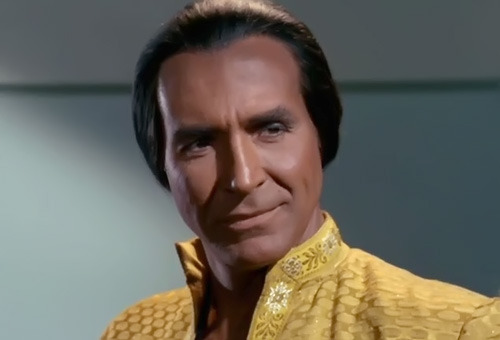
Briefly shown in the teaser is Benedict Cumberbatch, the star of  BBC's Sherlock, who has apparently been cast in the role as Khan Noonien Singh, a character notoriously portrayed by Ricardo Montalban in the original Star Trek series' 1967 episode "Space Seed", as well as in the 1982 film Star Trek II: The Wrath of Khan.

Star Trek Into Darkness is set for release on May 16, 2013.


With the release of this latest trailer, I am reminded of the time when I first saw a teaser for the 2009 Star Trek film based on the scene in the movie featuring a young James Kirk (played by Jimmy Bennett) in car chase, scored by the Beastie Boys tune "Sabotage". It was quite momentous for me. I had no idea which film the trailer was teasing - in fact I remember saying to Dwayne Slack, my roommate at the time, that I thought it might have been a Nokia commercial based on the ringtone - so when it is revealed at the end of the scene that the boy is "James Tiberius Kirk" and it is apparent that it is a spot for the new Star Trek film, I can honestly say it was the first (and probably the last) time a film trailer left me totally in awe, and had Dwayne and me jumping up and down and swearing like truck drivers for hours.
 

Wednesday, December 5, 2012

Tom Cheek Headed to the Hall of Fame


Tom Cheek, who was the Toronto Blue Jay's radio play-by-play man for  4,306 regular-season and 41 postseason games, is the 2013 recipient of the Ford C. Frick Award, presented annually for excellence in broadcasting by the National Baseball Hall of Fame and Museum. The announcement was made today at the MLB Winter Meetings in Nashville, Tenn.

The late Cheek will be honored as part of Hall of Fame Weekend, to be held July 26-29 in Cooperstown, N.Y.

After years of working in radio in Vermont, Cheek began work as a backup announcer to the 2011 Frick Award recipient Dave Van Horne on Expos broadcasts in 1974. Then, in 1976 at the age of 37, he landed the job as the radio voice of the expansion Blue Jays. Paired first with Hall of Fame pitcher Early Wynn, Cheek would later team up with Jerry Howarth in 1981 and the combination of Cheek's rich baritone and Howarth's distinct nasal delivery became the trademark sound of the team until Cheek died in fall of 2005.

Cheek called every regular-season and postseason Blue Jays game from the franchise's birth on April 7, 1977, through June 2, 2004. The next day, Cheek took the first of two days off to attend the funeral of his father. But upon his return, Cheek sensed he was not right physically when he was unable to retain information he had read only minutes earlier. On June 13, 2004 -- his 65th birthday -- Cheek underwent surgery to remove a brain tumor, but some of the tumor was unreachable. Cheek died a little more than a year later.

Cheek will be honored at the Hall of Fame's Awards Presentation on July 27 in Cooperstown, along with Paul Hagen, the winner of the 2013 J.G. Taylor Spink Award given by the Baseball Writers Association of America.

On a personal note, Tom Cheek will always be the sound of my childhood summers. I remember during our weekend family excursions - and this was prior to the time of online streaming and smart phones - we listened to Cheek and Howarth calling the Blue Jay games on the radio. As the team got more competitive in the late 80s and eventually winning back-to-back World Series championship teams of the early 1990s, we listened more intently and hung on their every word - the most memorable words perhaps being Cheek's call of Joe Carter's walk-off home run to win the 1993 World Series.

It's about time you got in Mr. Cheek!

Click here to read the story from the Blue Jays' web page

Read Andrew Innanen's blog

My friend Andrew Innanen - perhaps the sharpest pencil I know - has put together a collection of digital missives that are intriguing, puzzling, beautiful, insightful, nonsensical, and damn clever in his eponymous blog. Click here to read his blog


A photo I took of Andrew Innanen at the now-defuct Lion's Club in Toronto's Kensington Market, circa 1996.

Monday, December 3, 2012

Neil Young Interviewed on The Daily Show with Jon Stewart

Iconic Canadian musician and songwriter Neil Young being interviewed on The Daily Show with Jon Stewart to talk about his autobiography Waging Heavy Peace.

Nice.


Click here to watch the clip

Rick Mercer Rant for November 27, 2012

Rick Mercer's rant from the November 27 episode of the Rick Mercer report on CBC. This week's topic: People who don't want to get a free flu shot.

Gilda's Club: the PR mistakes

My former colleague Elissa Freeman has written a guest blog entry on jeffesposito.com discussing the PR foul ups following reports last week that the Cancer Support Community (CSC) allowed a Wisconsin affiliate to remove late comedienne and original cast member of NBC's Saturday Night Live Gilda Radner's name from Gilda's Club, a cancer support group.

CSC, which merged with Gilda’s Club in 2009, stated the name change was due to the fact that younger cancer patients did not know who Radner was, or of her legacy in her own battle ovarian cancer, which ended in 1989.

Freemen - one of Twitters’ Top 75 Badass Females and Toronto’s Top 150 Social Media Influencers - details why she believes CSC took the wrong approach in their PR response. Read the blog entry here


Fred Penner On George Stroumboulopoulos Tonight

A great interview with children's entertainer Fred Penner on CBC's On George Stroumboulopoulos Tonight to talk about playing a university pub tour. November 30, 2012

http://www.cbc.ca/strombo/

Addictions and Bad Dreams

My current obsessions, time wasters and indulgences, in no particular order, are:

My new cast iron pans. I don't know how or why I never cooked with them before. They take a beating and they are amazing at evenly distributing heat. Eggs and potatoes will never be the same again.


Ice Skating. 'Tis the season for the public rinks in the Greater Toronto Area to open. The relatively mild weather has put a damper on skating sessions, but that hasn't stopped me from checking out some rinks. For a look at the photos from my 2010-2011 Public Rinks Tour, click here.